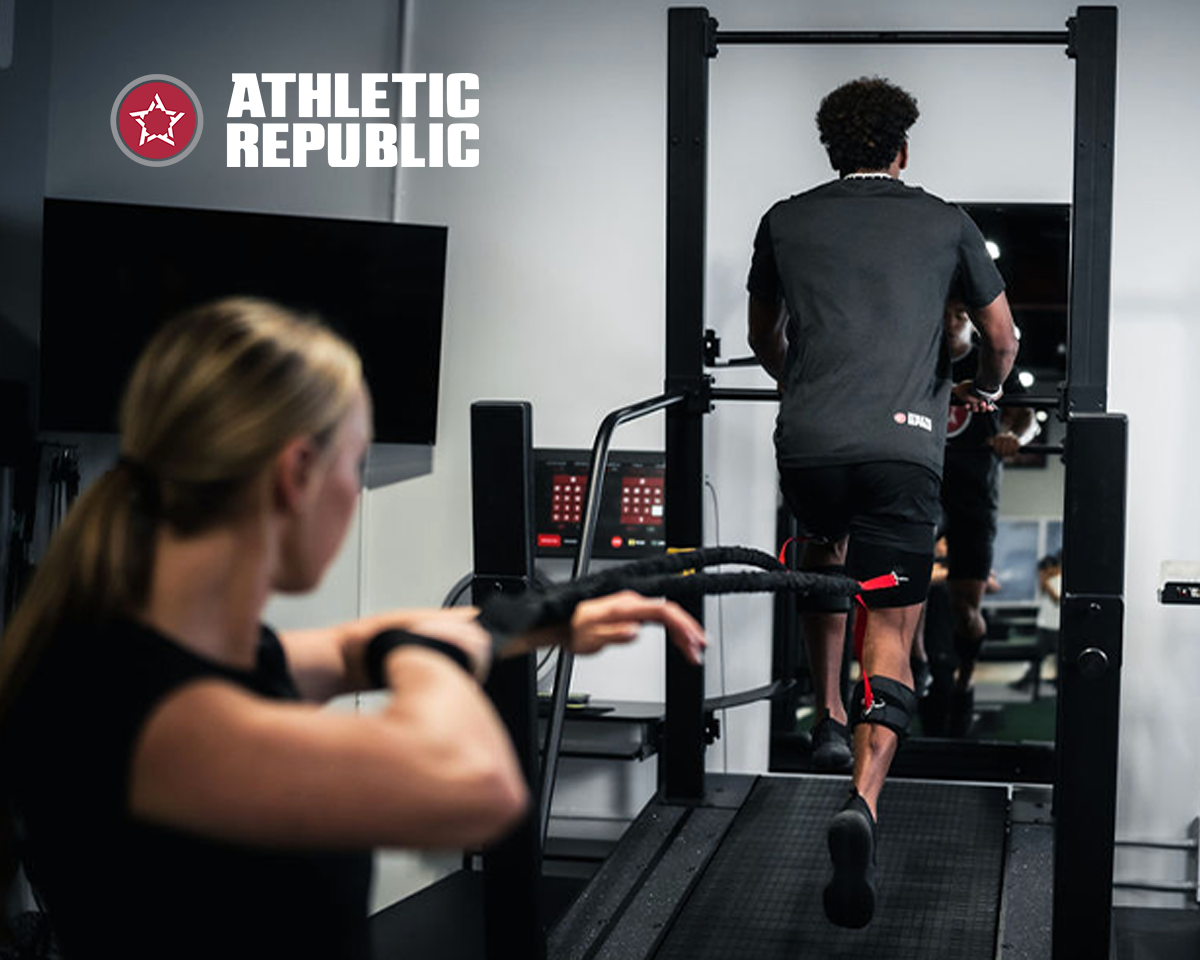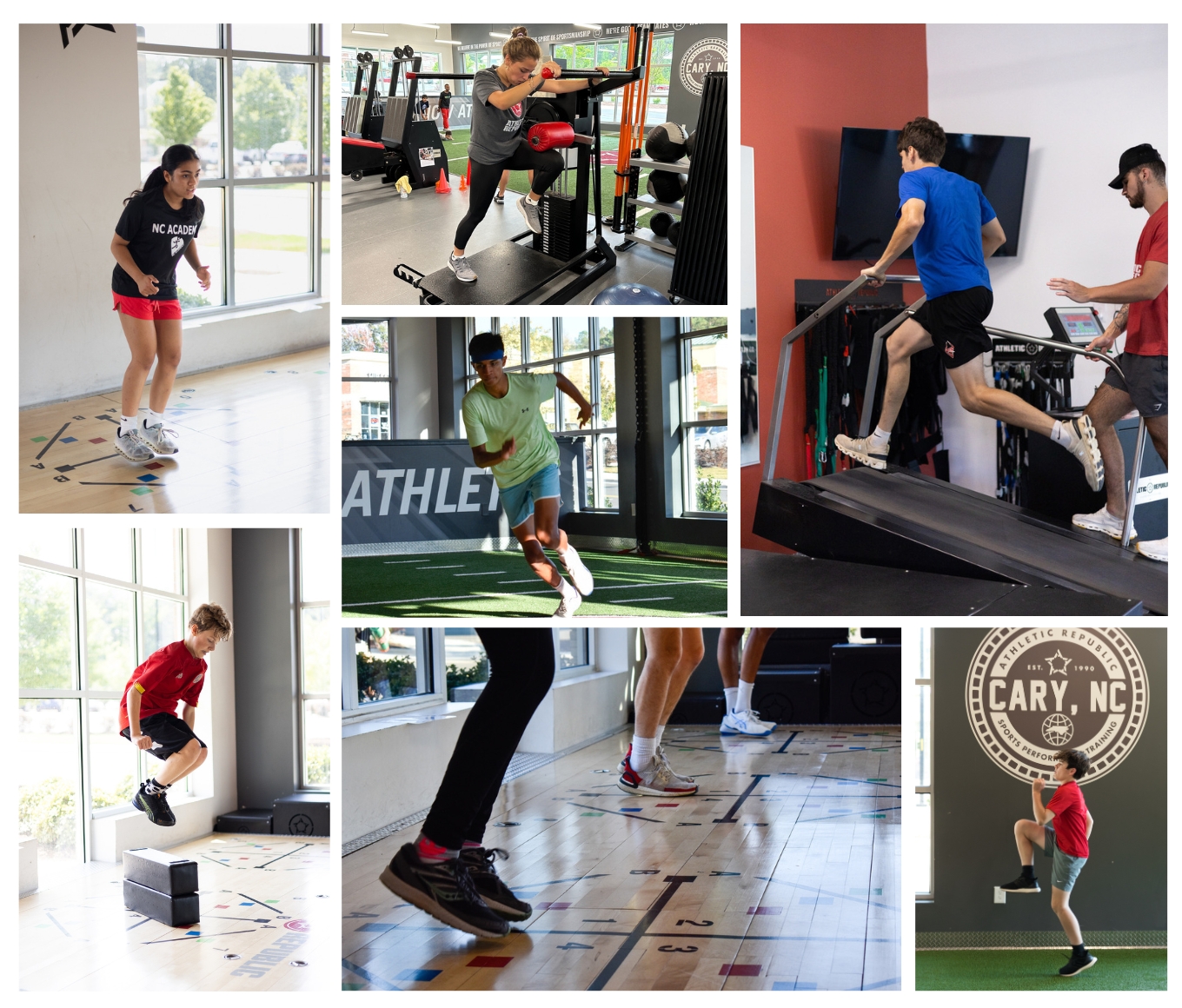
Walk into Athletic Republic Cary on any given afternoon and you’ll see something that might look a little unusual at first. A middle school soccer player doing jumping drills next to a high school varsity softball player. A 13-year-old basketball player on the treadmill while a college-bound sprinter catches her breath nearby. Everyone working hard, but nobody doing exactly the same thing.
That’s not an accident. That’s the whole idea.
Here’s what’s actually happening in our Acceleration program (for student athletes 12+ years of age), and why it matters for your athlete.
Every Athlete Gets Their Own Plan – Not a Generic Workout
At most gyms or team practices, everyone does the same workout. You line up, you run the same drill, you do the same lifts. It’s efficient, but it’s not always effective, especially for developing athletes whose bodies and movement skills are all at different stages.
At Athletic Republic, every athlete in our Acceleration program trains on what we call a protocol — a detailed, session-by-session training plan built around where that athlete is right now and where they need to go. We have over 140 different protocols in our system, covering athletes from middle school all the way through the collegiate level, across virtually every sport.
Think of it like a prescription from a doctor. Two patients can walk into the same office with similar complaints, but walk out with different prescriptions based on what each of them actually needs. Generic doesn’t get results. Personalization does.
Why The Starting Point Matters
Our protocols are built around one core truth: mechanics come before speed, and speed comes before power. An athlete who moves efficiently will always outperform one who just ‘works hard’ with poor form, especially over a long season.
That’s why every athlete starts at the level that’s right for them, not necessarily the most advanced one. For some athletes, that means jumping right into our standard Level 1 program. For others, we start at a foundational level first to make sure the movement mechanics are where they need to be before we add intensity. Either way, the goal is the same: build it right before we build it fast.
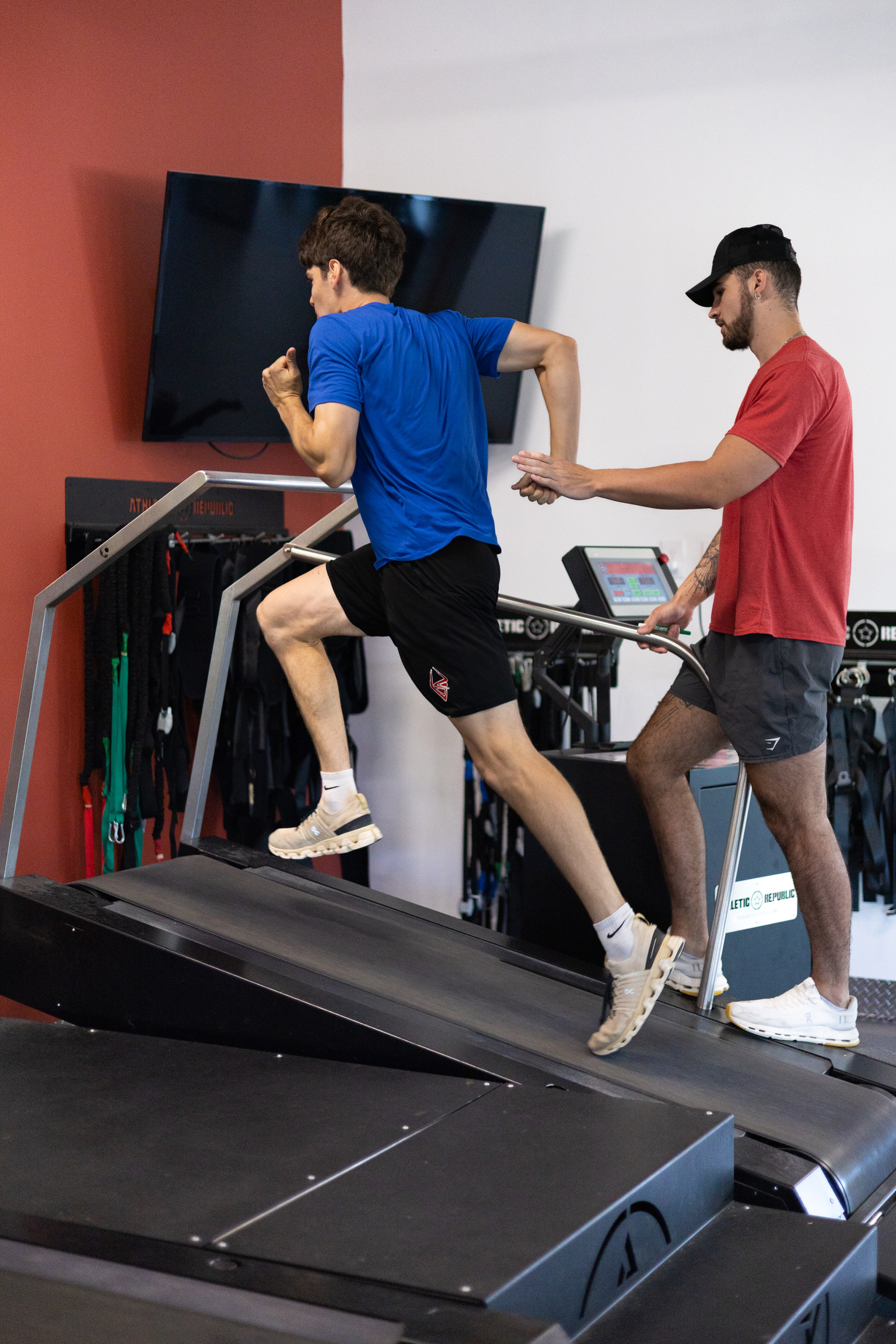
Running looks simple, but it’s actually a skill. The way your foot lands, how your hips drive forward, how your arms sync with your legs — all of it affects how fast you move and how likely you are to get hurt. Our incline treadmill work is specifically designed to teach proper mechanics. When you run uphill at the right incline, your body is forced into the right position. It becomes almost physically impossible to land the wrong way.
Once we see that an athlete has solid mechanics, then we start adding speed and intensity. Build the house on the right foundation, and it doesn’t fall down.
What Actually Happens in a Session
Sessions are structured to develop athletes both as a group and as individuals. After a dynamic warm-up and ground-based work done together, each athlete moves into their personalized protocol, the part of training that’s built specifically around them.
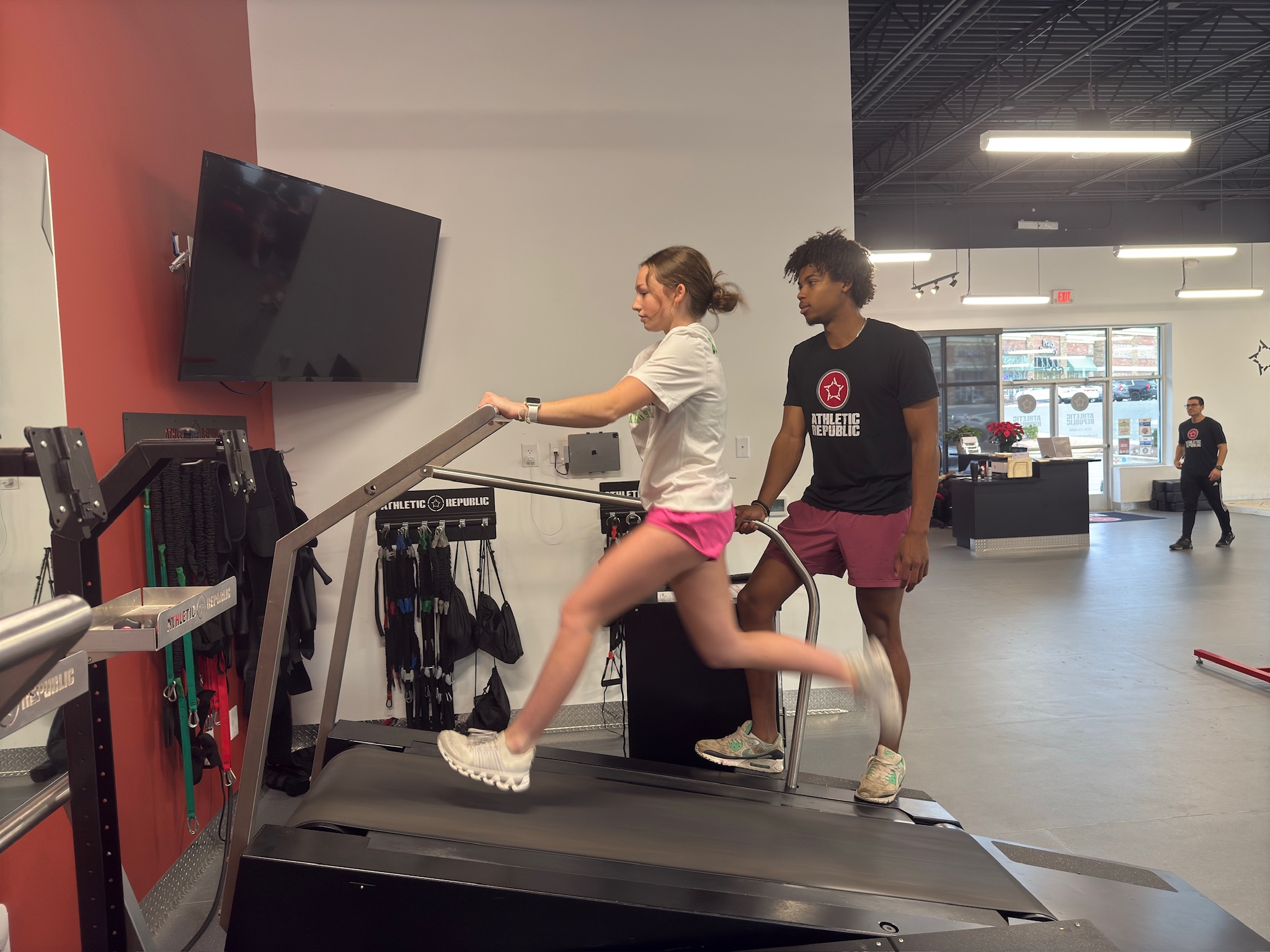
Treadmill Work — Our proprietary super running treadmills aren’t like the ones at a regular gym. Athletes run in short, intense bouts at steep inclines and challenging speeds. Between bouts, they’re not just standing around, they’re doing targeted hip and mobility work that reinforces the same movement patterns and actually primes their muscles to perform better on the next run. This is called post-activation potentiation. Basically, warming up specific muscles so they fire harder when you need them to.
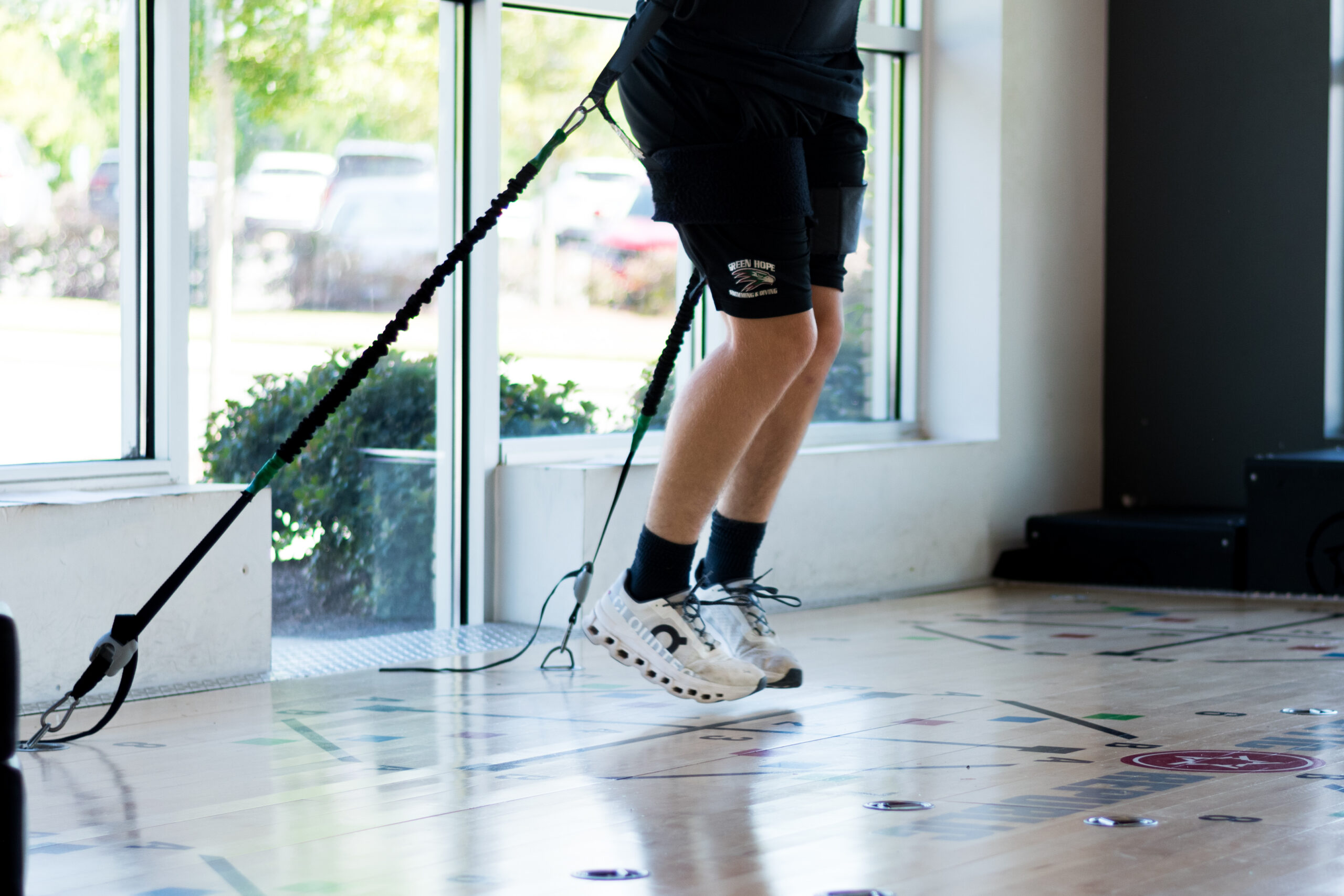
Plyometrics — These are explosive jumping and footwork drills done on our proprietary Plyo Floor. Plyometrics build what coaches actually care about: the fast-twitch power that lets an athlete explode off the line, jump higher, and change direction without losing a step. Research shows that athletes who complete more plyometric sessions see dramatically better results in vertical jump, standing broad jump, and short-distance speed than those who skip this part of their training.
The standard full program is 24 sessions — 12 treadmill, 12 plyometrics — completed over about 8 weeks training three days per week. Athletic Republic’s data and research conducted over the last 35 years, shows this is the sweet spot for real, measurable performance improvement.
Where Each Athlete Starts
Not every 12-year-old starts in the same place, and not every 17-year-old is ready for the most advanced work. We assess each athlete individually before placing them in their starting protocol.
For newer or younger Acceleration athletes who need to build a foundation first, we have introductory protocol levels that emphasize learning proper running mechanics at manageable speeds and intensities. For athletes who already have solid mechanics and a training base, we move faster through the early levels and progress more quickly to higher-intensity work.
One important note: age matters less than movement quality. A mature, coordinated 13-year-old might progress faster than a 16-year-old who never learned how to move correctly. We assess the individual, not the birth certificate.
For the advanced athletes ready for Level 2 and beyond, the demands are significant. Only a relatively small percentage of athletes are genuinely ready for those levels, and we don’t rush athletes there before they’ve earned it.
Mixed Ages, Mixed Levels – Why It Works
If you haven’t trained with us before, you might wonder how a 12-year-old and a 17-year-old can train in the same session effectively. The answer is simple: because they’re never competing with each other.
On a treadmill, it doesn’t matter if the person next to you is going faster. Everyone finishes at the same place. There’s no one “winning” or falling behind in a way that’s visible to the group. A younger athlete running at 8 mph on a steep incline is working just as hard for their level as the older athlete running at 15 mph. The protocol matches the person.
What we’ve actually found is that mixed groups create better training environments. Younger athletes get inspired watching older ones push through hard sets. Older athletes often step into natural mentorship roles. Athletes from different schools and sports realize they have more in common than they thought. The culture that it creates is something genuinely special, and it shows up in the results.
How We Know It’s Working
We don’t just train athletes and hope for the best. We measure progress consistently.
Our Acceleration athletes are tested every week, rotating through key performance areas like speed, agility, explosive power, and strength. This allows us to continuously track improvement and keep data up to date.
Within about five weeks, all major performance metrics are refreshed, giving athletes and parents a clear, ongoing picture of progress.
These numbers tell the story. Over 35+ years of Athletic Republic data, including research studies with high school athletes aged 14–17 and college athletes, consistently show that athletes who complete the full program improve significantly across every one of these measures. The biggest gains show up in explosive power. Athletes completing the full 24-session program have seen vertical jump improvements more than double those of athletes on shorter programs.
That’s not marketing. That’s data.
So What Should You Expect?
If your athlete is just starting with us, here’s what the first few weeks look like:
Week 1: Assessment and introduction. How does your athlete move? Where are the weaknesses? What’s the right starting point? The first 2–3 sessions are still part of our evaluation process.
Weeks 2–3: You may not see dramatic changes yet. That’s normal. The nervous system is learning new movement patterns. Real athletic improvement is built on neural adaptation first. The brain and muscles have to rewire before the speed and power gains show up visibly.
Weeks 4–8: This is where athletes and parents start noticing. Stride is cleaner. Footwork is quicker. Jumps are higher. And athletes often feel the difference before they see it. More explosive off the line, less winded, more confident in their movement.
The Bottom Line
There are a lot of places in the Triangle that will run your athlete through speed ladders, cone drills, and generic conditioning circuits. We respect the work other programs do, but that’s not what we are.
What we do at Athletic Republic Cary is grounded in over 35 years of sports science research, proprietary technology, and a genuine understanding of how athletic performance actually develops. Every workout has a purpose. Every protocol respects where your athlete is today while systematically building toward where they need to be.
We believe the best investment you can make in your young athlete isn’t just more reps, it’s the right reps, done the right way, in the right order.
That’s what a protocol is. That’s why it matters. And that’s what we do every day at 607 Mills Park Drive.
Ready to see what the right training looks like for your athlete?
607 Mills Park Dr, Cary, NC 27519 (919) 230-0899 cary.athleticrepublic.com
Schedule a free trial session today.